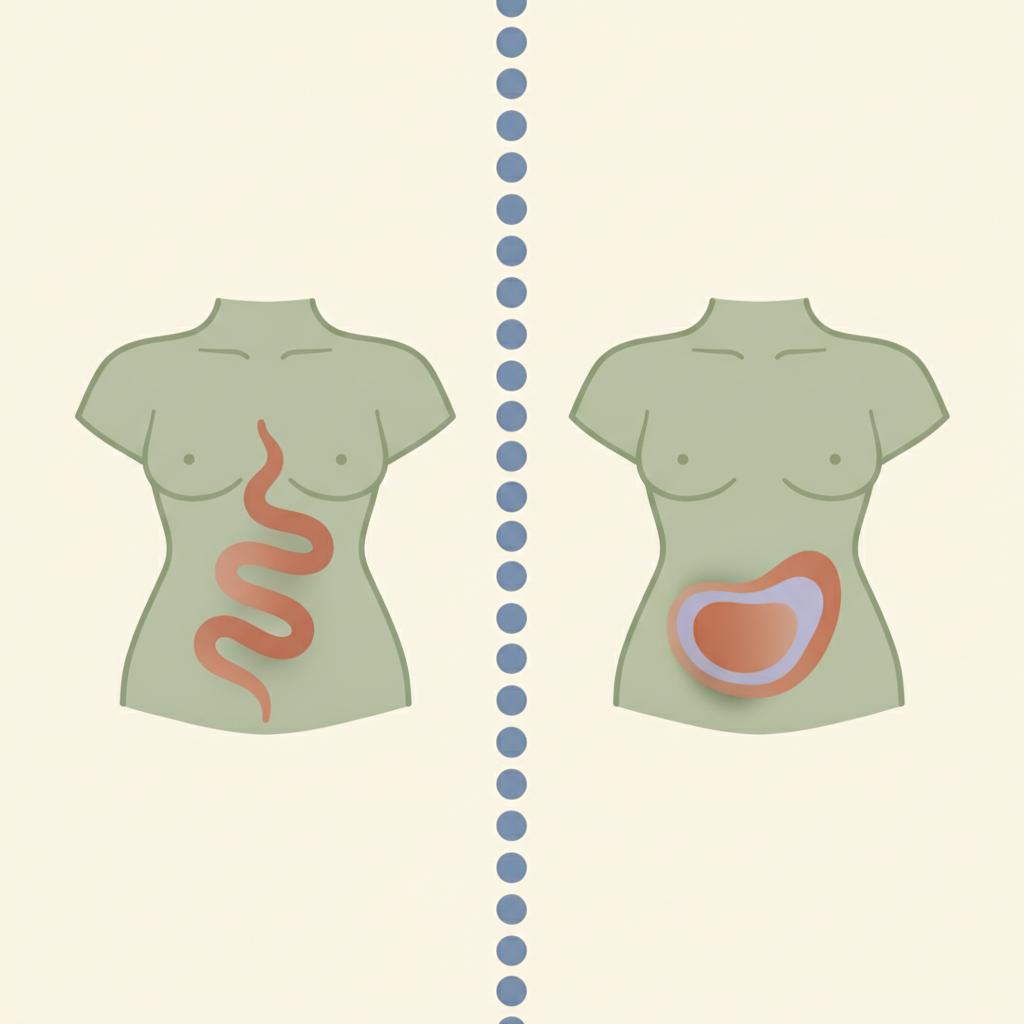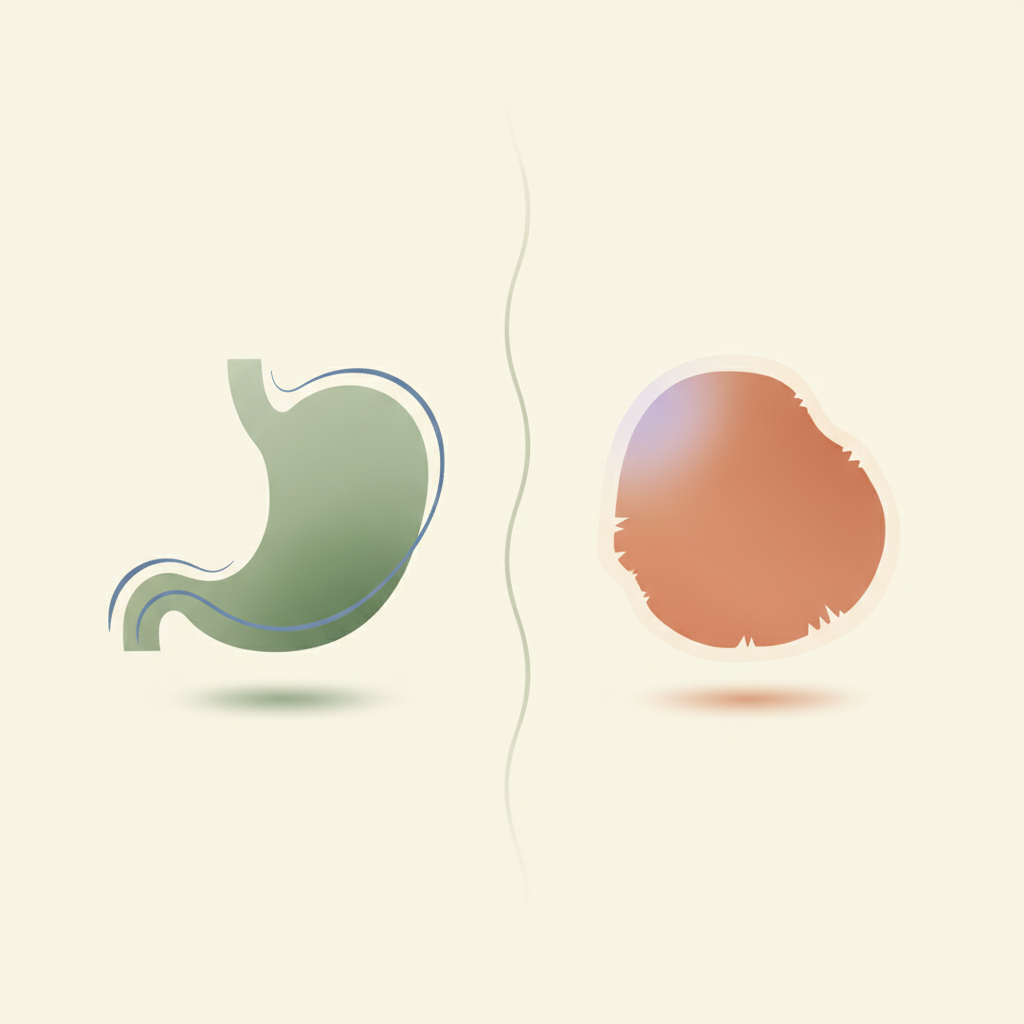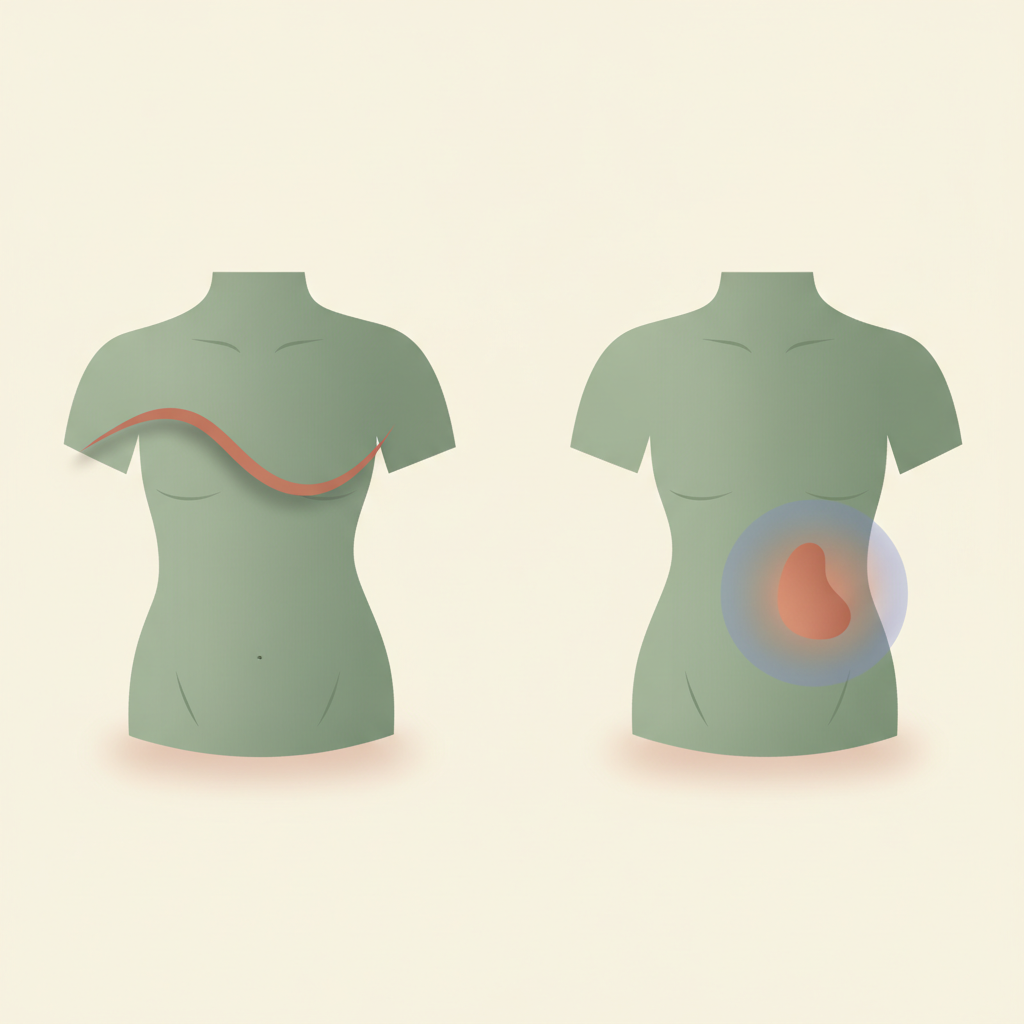
These terms are often used interchangeably, and while they're closely related, there's a meaningful distinction worth understanding, mainly around frequency and severity.
The basic distinction
Acid reflux refers to the physical event — stomach acid moving up into the esophagus — which is something almost everyone experiences occasionally, often without even noticing, and it's not inherently a disease. GERD (gastroesophageal reflux disease) is the diagnosis given when reflux happens frequently or severely enough to cause bothersome symptoms or damage to the esophagus.
Where the line is generally drawn
A commonly used general guideline is that reflux symptoms occurring more than twice a week, or symptoms severe enough to affect quality of life or cause esophageal damage, cross the threshold from occasional acid reflux into GERD. This isn't a strict, universally applied cutoff, but it captures the general idea that frequency and impact are what separate an occasional, normal experience from a diagnosable condition.
Why this distinction matters practically
Occasional reflux after a particularly large or rich meal usually doesn't need medical treatment beyond simple lifestyle adjustment. Frequent or severe symptoms, meeting the general threshold for GERD, are worth addressing more systematically — potentially with medication, further evaluation, and more consistent lifestyle changes — rather than treating each episode as an isolated, unrelated event.