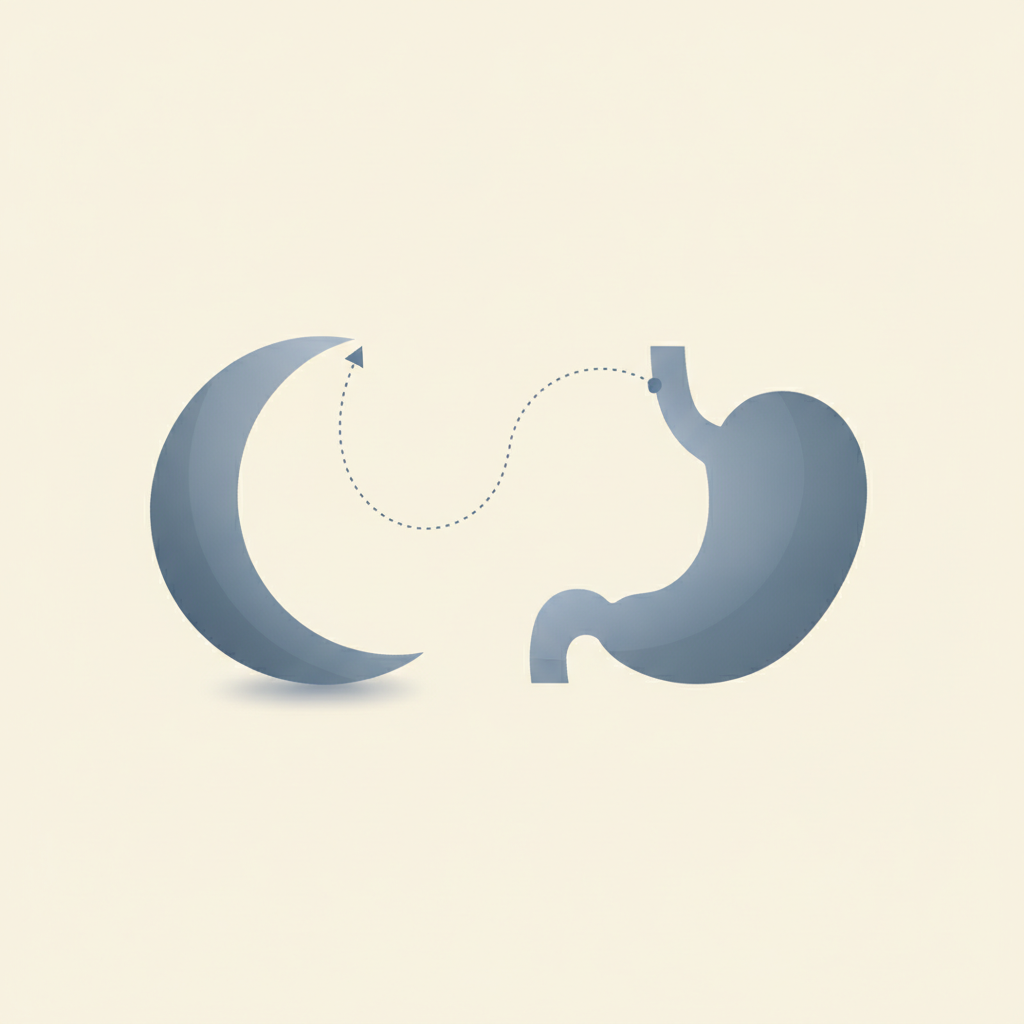
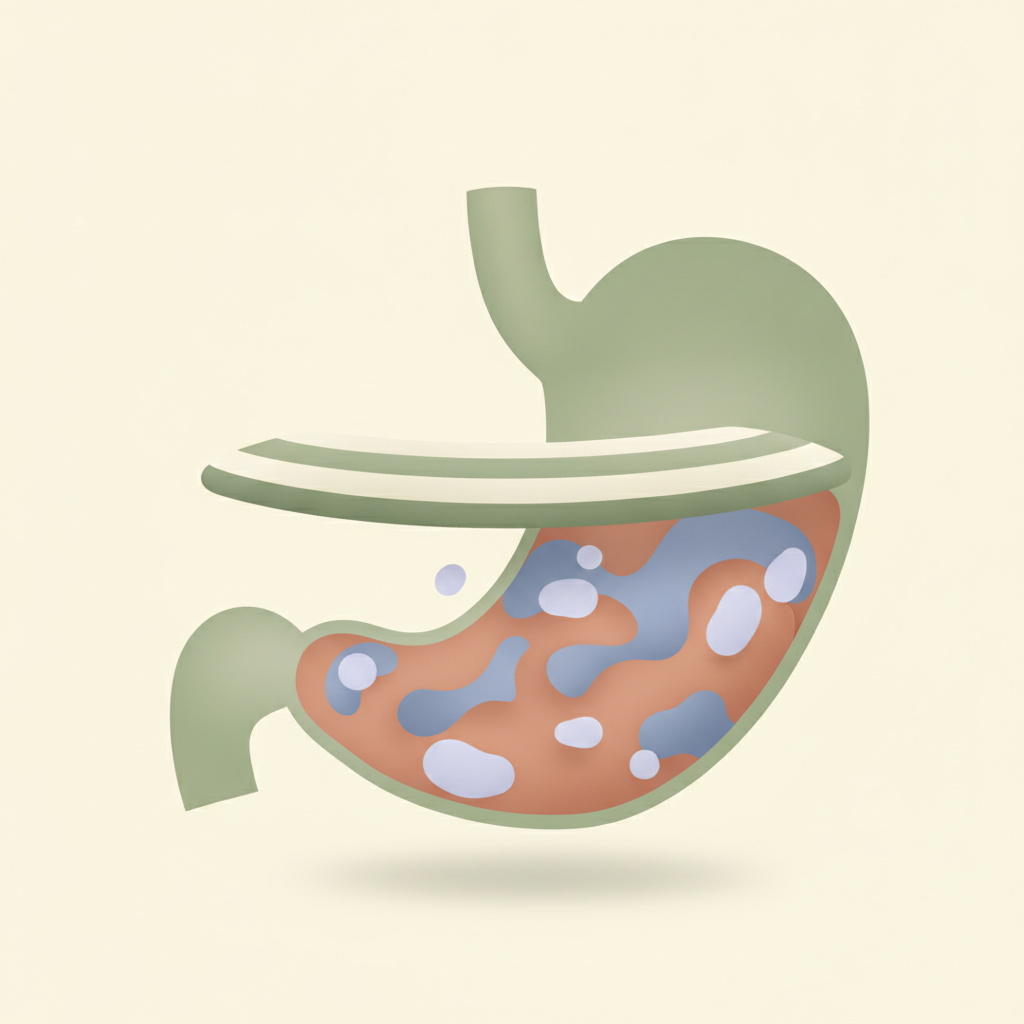
Alginate-based products work differently from antacids or acid reducers — rather than neutralizing or reducing acid, they form a physical barrier. When alginate (derived from seaweed) mixes with stomach acid, it creates a gel-like "raft" that floats on top of the stomach's contents, sitting right at the point where reflux would occur. If reflux happens, the raft is what comes up first, rather than the acid underneath it, which reduces the irritation reaching the esophagus. This makes alginate particularly useful for reflux that happens after meals or when bending over, since it works mechanically rather than chemically. It's generally taken after meals and before bed, when reflux is most likely, and is often used alongside — not instead of — antacids or acid-reducing medication, since it addresses a different part of the problem.