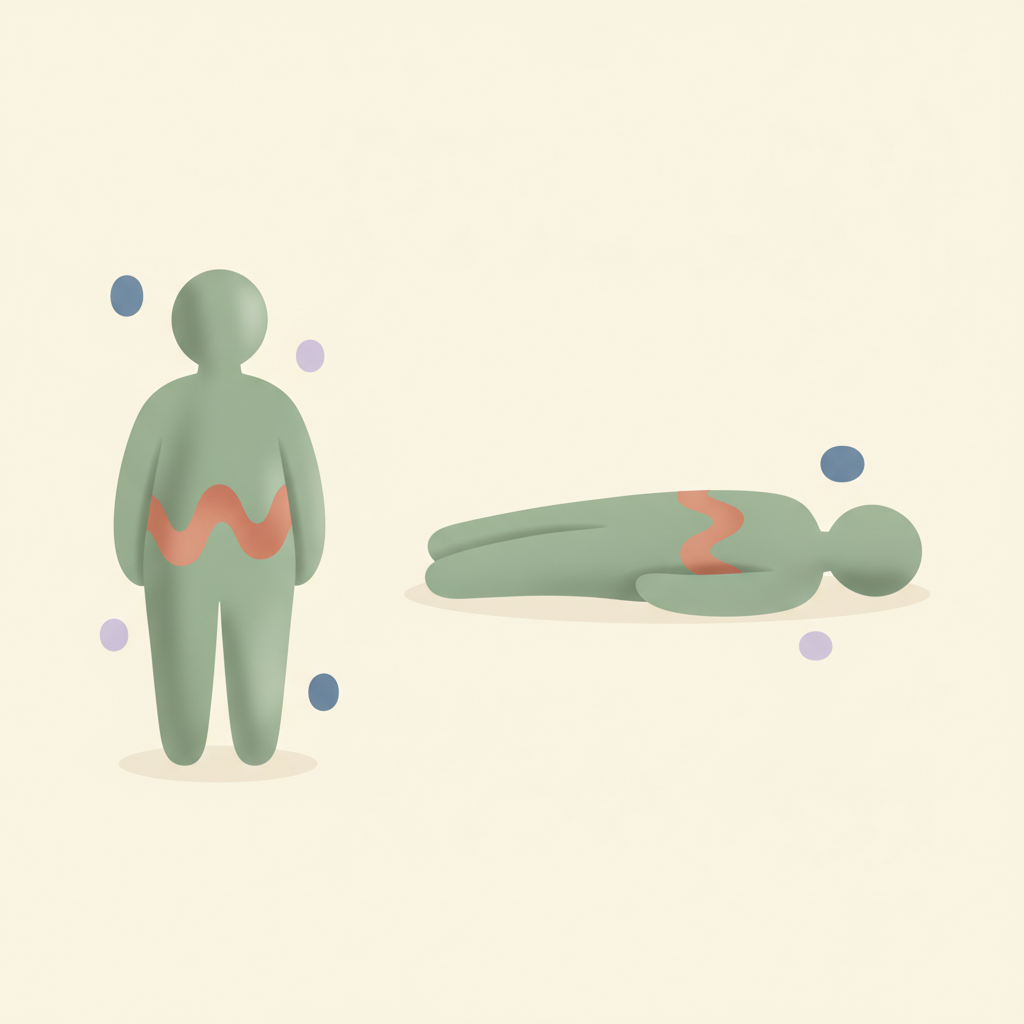
How you sleep changes how reflux behaves, independent of anything you ate. Two things matter: which side you're on, and how elevated your upper body is. Getting both right is one of the highest-leverage changes for nighttime symptoms.
Left side beats right side
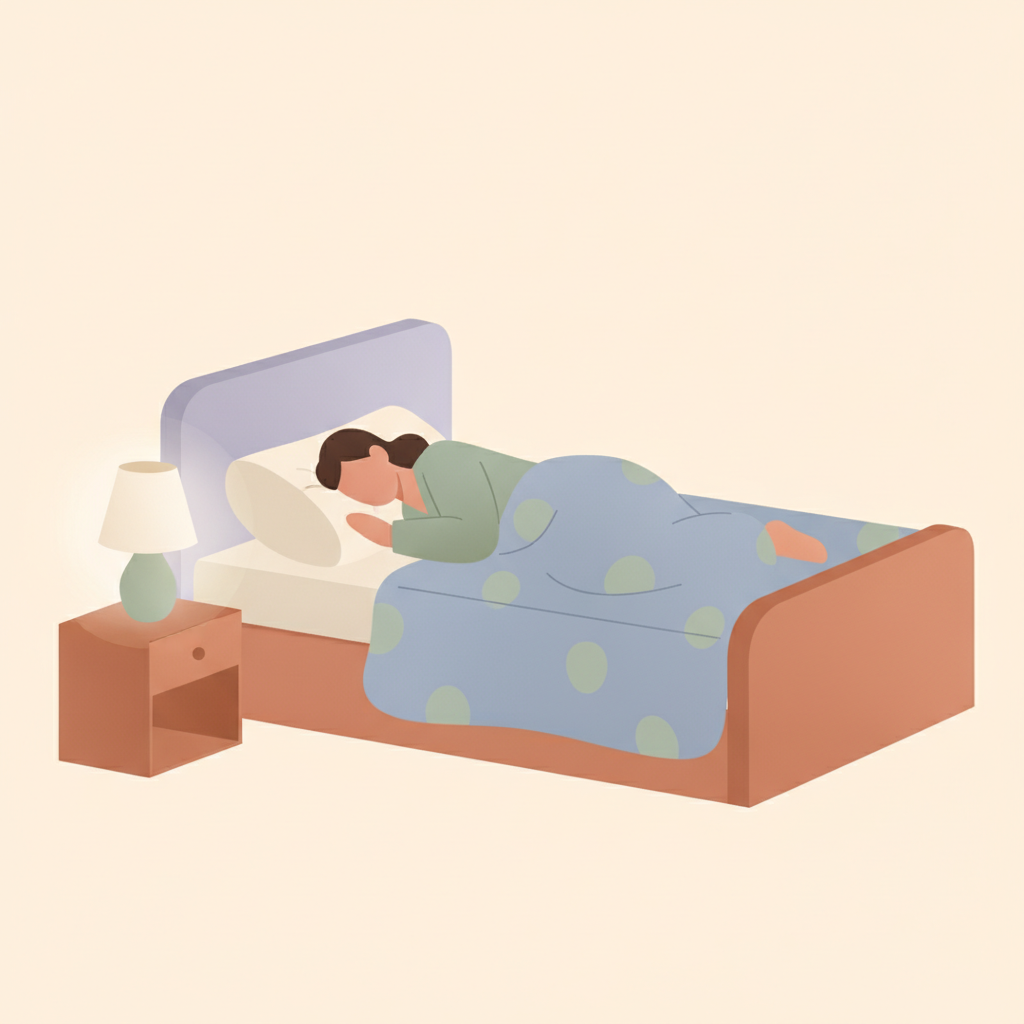
The stomach sits slightly to the left of center, and the junction where the esophagus meets the stomach sits higher on the left side than the right. Lying on the left keeps that junction above the level of stomach contents, so acid has to work against gravity to reach it. Lying on the right does the opposite — it positions the junction lower, making reflux more likely and, for many people, worse when it happens.
This is a well-established, low-effort change: no equipment, no cost, just a preference to build. It can take a few nights to feel natural if you're used to sleeping on your right side or back.
Elevation: the torso, not just the head
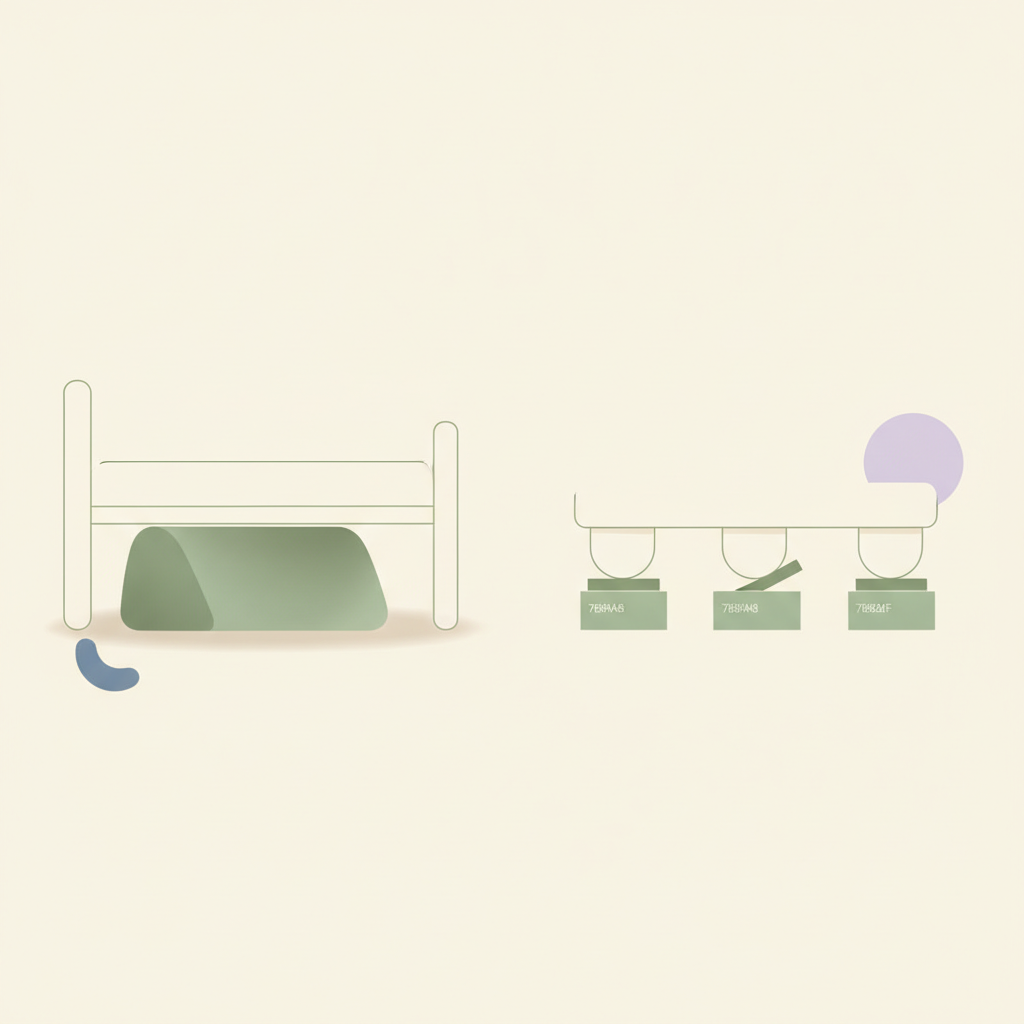
Raising only the head with an extra pillow or two often makes things worse, not better — it bends the body at the waist and can increase pressure on the stomach. What actually helps is elevating from the torso: a wedge pillow that lifts the chest and shoulders, or raising the entire head of the bed a few inches with risers.
The goal is a gentle, sustained incline over several hours of sleep, not a single propped-up angle for the first hour. A wedge in the 6–8 inch range at the highest point is a common starting point; higher isn't automatically better; comfort matters, since a position you can't sleep in doesn't help anyone.
What to avoid
- Sleeping flat on your back, which offers no gravity advantage
- Sleeping on your right side
- Stacking regular pillows under just the head or neck
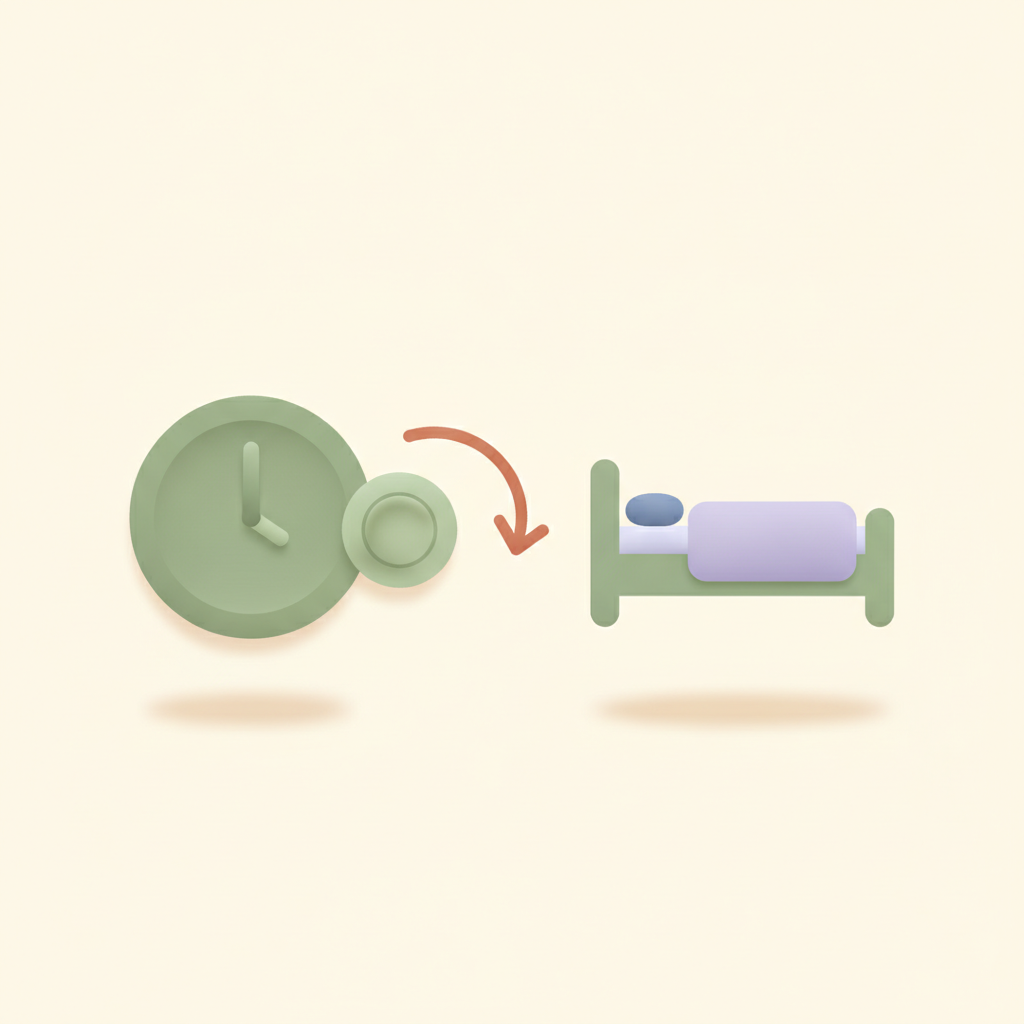
- Eating within 2–3 hours of lying down, which matters as much as position
Putting it together
The most effective combination for most people is: left side, torso elevated 6–8 inches, last meal finished at least 3 hours before bed. None of these alone is a complete fix, but together they address the two things that make nighttime reflux worse — gravity working against you, and a stomach that's still full when you lie down.
If symptoms are severe enough to disrupt sleep most nights despite these changes, that's worth raising with a doctor rather than adjusting further on your own.