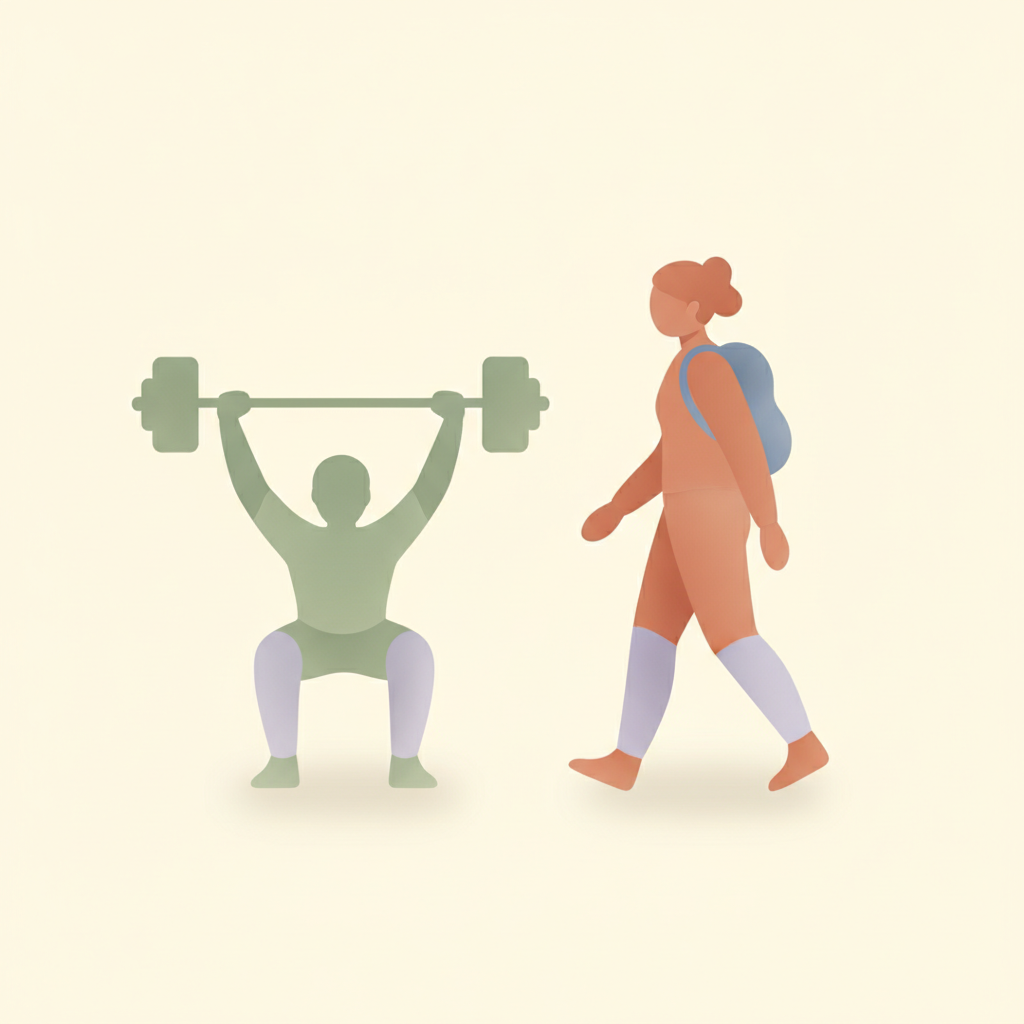
Certain types of exercise can worsen hiatal hernia symptoms by increasing abdominal pressure or involving movements that push stomach contents toward an already-compromised diaphragm opening.
Exercises worth modifying or avoiding
Heavy weightlifting, particularly exercises that involve straining or holding your breath (like heavy squats or deadlifts using the Valsalva maneuver), significantly increase abdominal pressure. Sit-ups and crunches, along with any exercise involving a lot of forward bending or inversion, can also aggravate symptoms for some people.
Why breath-holding during exercise is a specific concern
Holding your breath while straining (common in heavy lifting) dramatically increases pressure in the abdomen and chest simultaneously, which can push against the hernia and worsen reflux symptoms more than the physical movement itself.
More hernia-friendly alternatives
Walking, swimming, cycling, and lighter resistance training with controlled breathing (exhaling during exertion rather than holding your breath) are generally better tolerated. If you want to continue strength training, working with a trainer on proper breathing technique and starting with lighter weights can help you stay active without consistently triggering symptoms.
This isn't personal medical advice — if you have a diagnosed hiatal hernia, it's worth discussing an exercise plan with your doctor, since severity varies significantly from person to person.