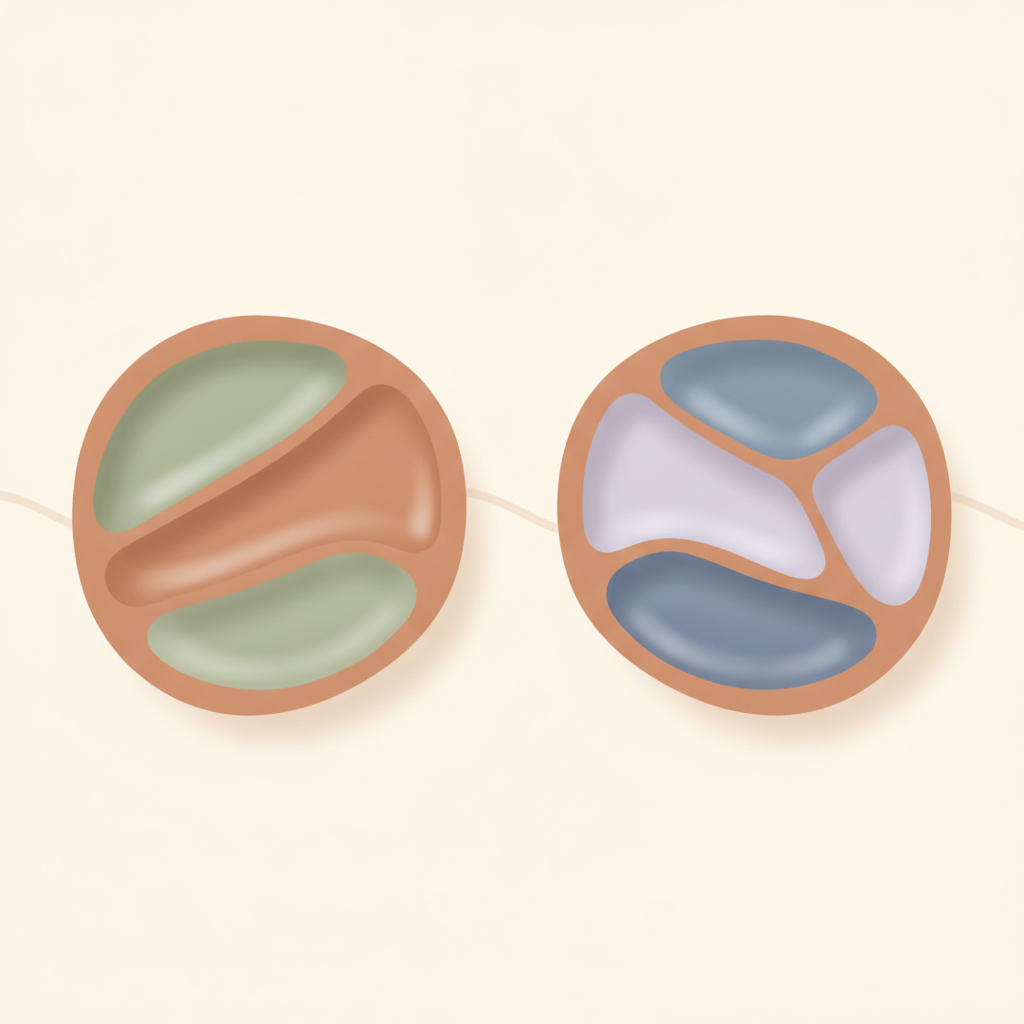
These two approaches are aimed at different problems, and mixing them up leads to a lot of unnecessary food restriction. A low-acid diet targets foods that are acidic themselves or that relax the lower esophageal sphincter — citrus, tomato, mint, caffeine, alcohol. A low-FODMAP diet targets fermentable carbohydrates that can cause bloating and gas, which is a different mechanism tied more to IBS-type symptoms than to reflux specifically.
Where they overlap
Some foods show up on both lists — garlic and onion, for instance, are common reflux triggers for some people and also high-FODMAP. But plenty of low-acid foods are high-FODMAP (certain fruits, wheat-based products) and plenty of low-FODMAP foods are acidic (citrus, tomato), so following one diet doesn't automatically give you the other.
Which one is worth trying first
If your main symptoms are heartburn and regurgitation, a low-acid approach targets the actual mechanism more directly. If bloating, gas, and general digestive discomfort are part of the picture alongside reflux, a low-FODMAP trial (usually done with guidance, since it's fairly restrictive) may address a separate but co-occurring issue. Combining both at once is possible but makes it hard to tell which change is actually helping, so introducing one at a time gives clearer information.