Bloating and reflux often show up together, but they're not the same mechanism, and it's worth understanding the connection rather than assuming one directly causes the other.
How they're connected
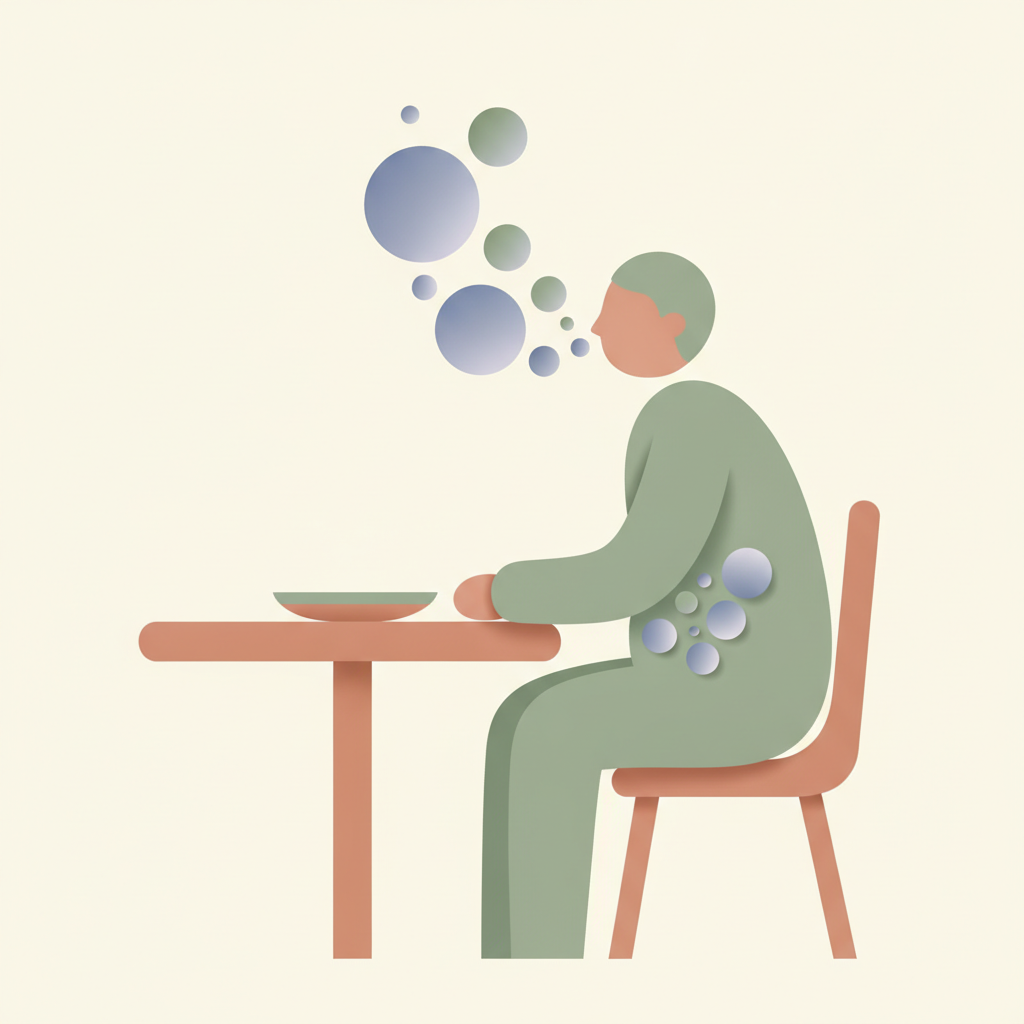
A stomach that's overly full — whether from a large meal, swallowed air, or slow digestion — creates pressure that can both cause the bloated, distended feeling and push against the lower esophageal sphincter, contributing to reflux at the same time. In that sense, they often share a root cause (excess stomach volume or pressure) rather than one symptom triggering the other directly.
Common contributors to both
Eating too quickly (which swallows extra air), carbonated drinks, large meals, and certain hard-to-digest foods can drive both bloating and reflux simultaneously, which is why addressing meal size and eating pace tends to improve both symptoms together.
When it's worth a closer look
If bloating is a dominant, daily symptom alongside reflux, it's worth discussing with a doctor, since conditions like small intestinal bacterial overgrowth (SIBO) or a food intolerance can cause both bloating and reflux-like symptoms and benefit from a different approach than reflux treatment alone.