
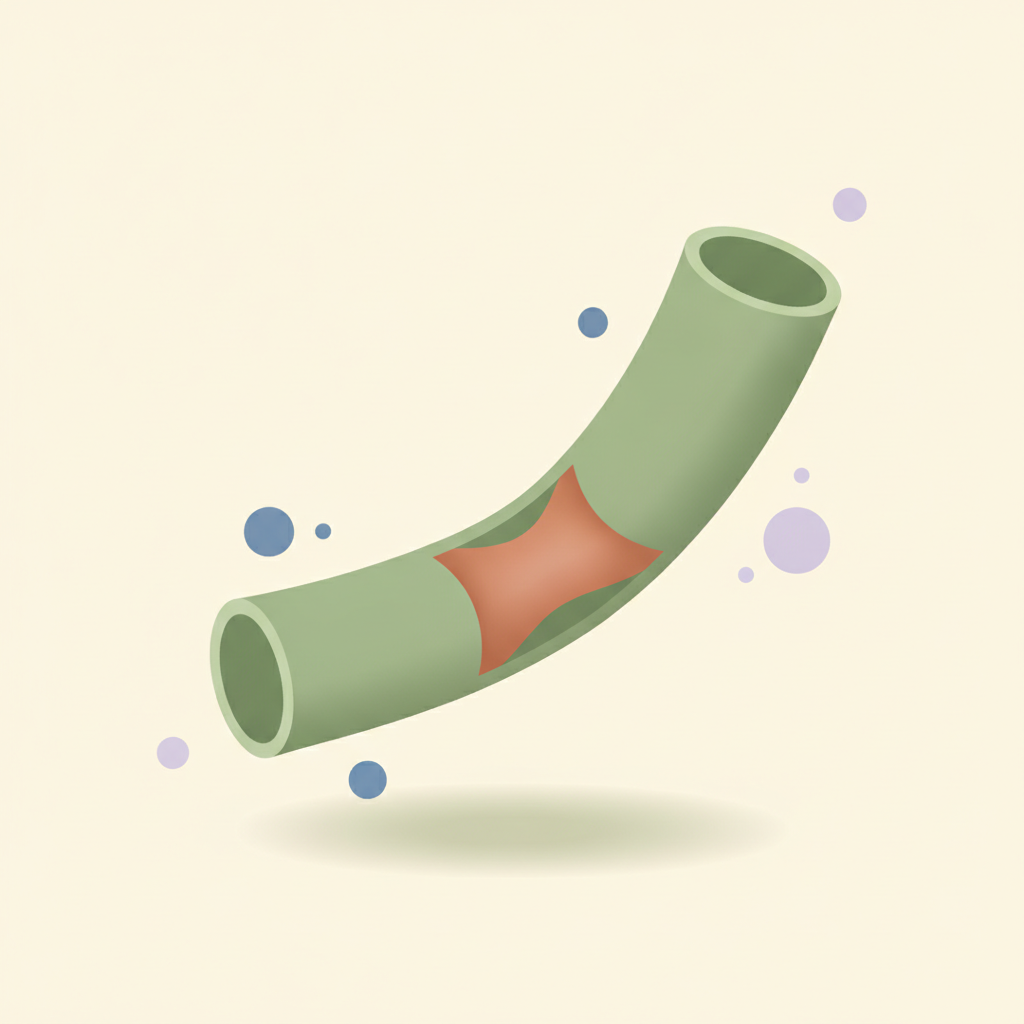
Difficulty swallowing (dysphagia) can occur alongside reflux, and while it's sometimes a mild, temporary result of esophageal irritation, it's one of the reflux-related symptoms that more consistently warrants a medical evaluation rather than home management alone.
Mild vs. more concerning patterns
A sensation that food is moving slowly, or occasional mild difficulty with very dry or large bites, can result from esophageal inflammation caused by chronic acid exposure. More concerning patterns include difficulty that's progressive (getting worse over weeks), food consistently feeling stuck, pain with swallowing, or difficulty with liquids as well as solids — these point toward a narrowing (stricture) or other structural change that needs evaluation.
Why this symptom gets extra attention
Chronic, untreated reflux can lead to esophagitis and, over time, strictures or other tissue changes that specifically affect swallowing. Because these changes are more serious than typical heartburn and are usually diagnosed with an endoscopy, difficulty swallowing is one of the reflux symptoms doctors take most seriously when patients report it.
This isn't personal medical advice. Any new or worsening difficulty swallowing deserves a prompt conversation with a doctor rather than being managed with diet changes alone.