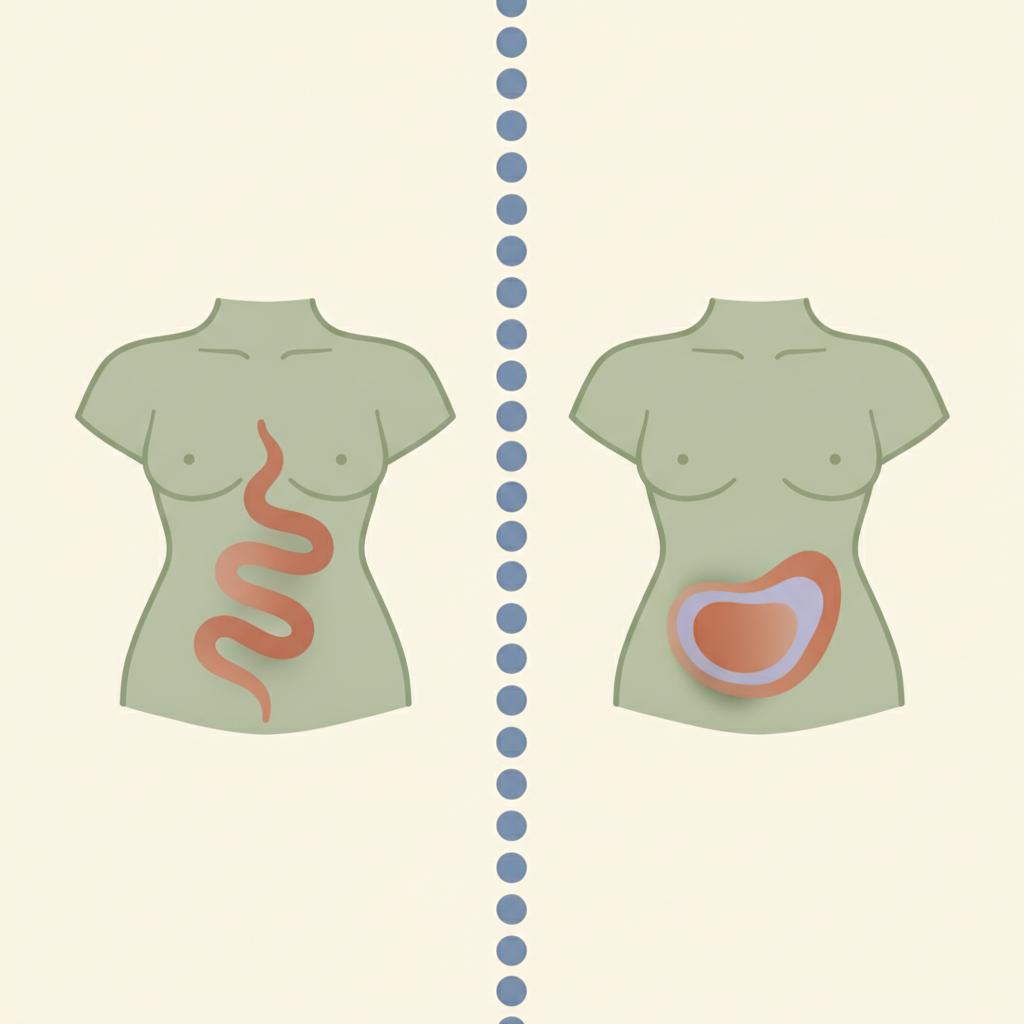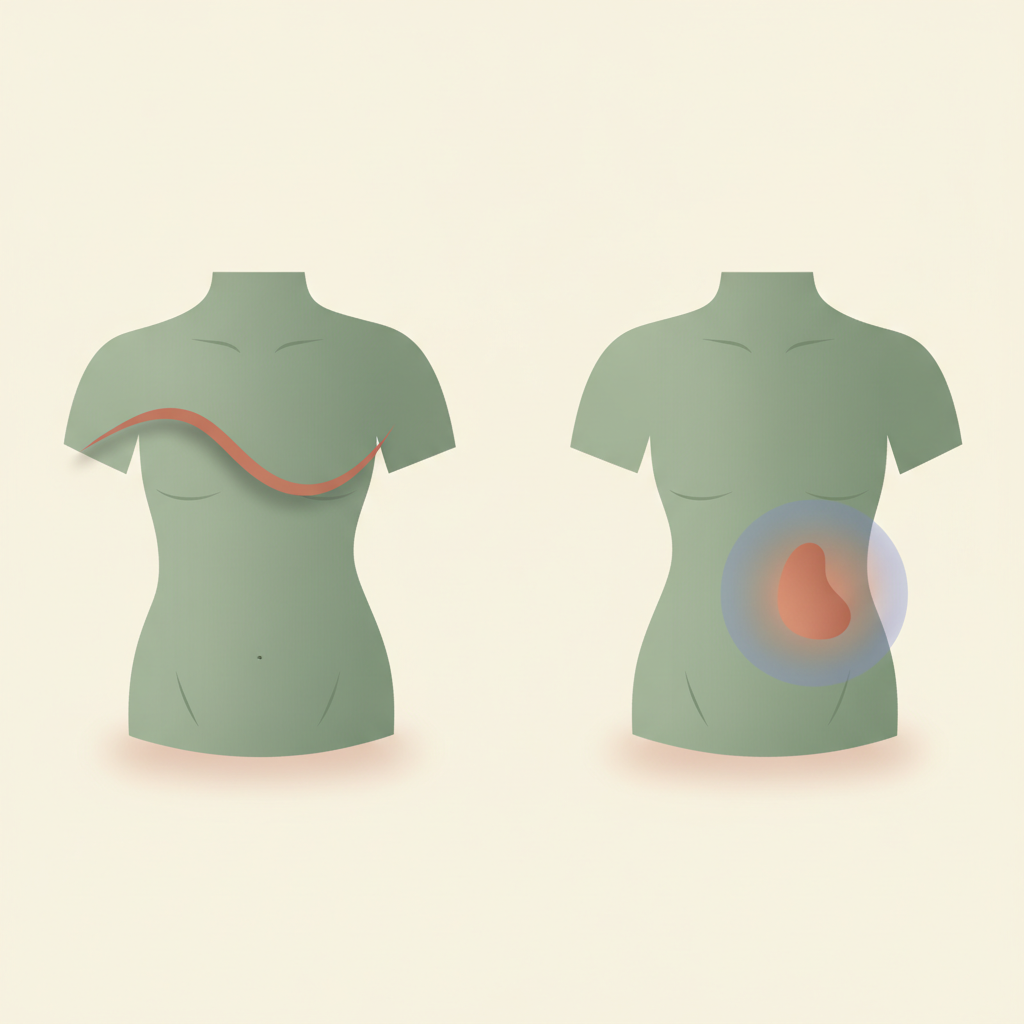
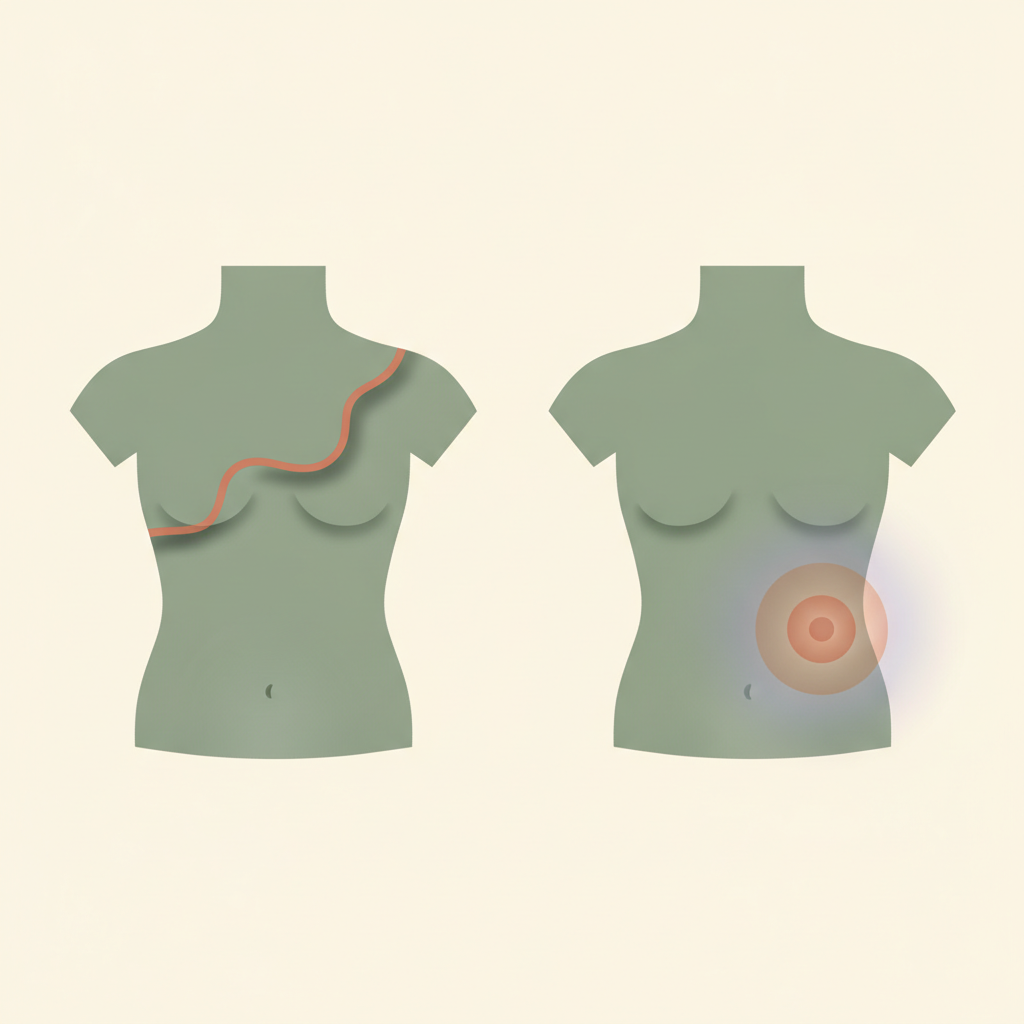
Costochondritis — inflammation of the cartilage connecting the ribs to the breastbone — can cause chest pain that's sometimes confused with reflux-related discomfort, though the underlying cause and typical treatment are completely different.
Key distinguishing features
Costochondritis pain is typically reproducible by pressing on the chest wall near the breastbone, which reflux pain is not — this is one of the more reliable ways to distinguish the two at home, though it shouldn't replace medical evaluation for new or concerning chest pain. Costochondritis pain often worsens with movement, deep breathing, or certain positions, while reflux pain is more closely tied to eating, meal timing, and lying down.
Why chest pain of any kind deserves caution
Even though costochondritis and reflux are both generally benign causes of chest discomfort, new or unexplained chest pain should always be evaluated by a medical professional to rule out more serious causes, particularly heart-related issues, before assuming it's one of these more benign explanations.
What tends to help costochondritis specifically
Unlike reflux, costochondritis often responds to anti-inflammatory approaches (like NSAIDs, if appropriate for you) and rest from activities that aggravate the chest wall, rather than acid-suppressing treatment, which is part of why an accurate diagnosis matters for getting the right relief rather than treating chest wall pain as if it were reflux.