
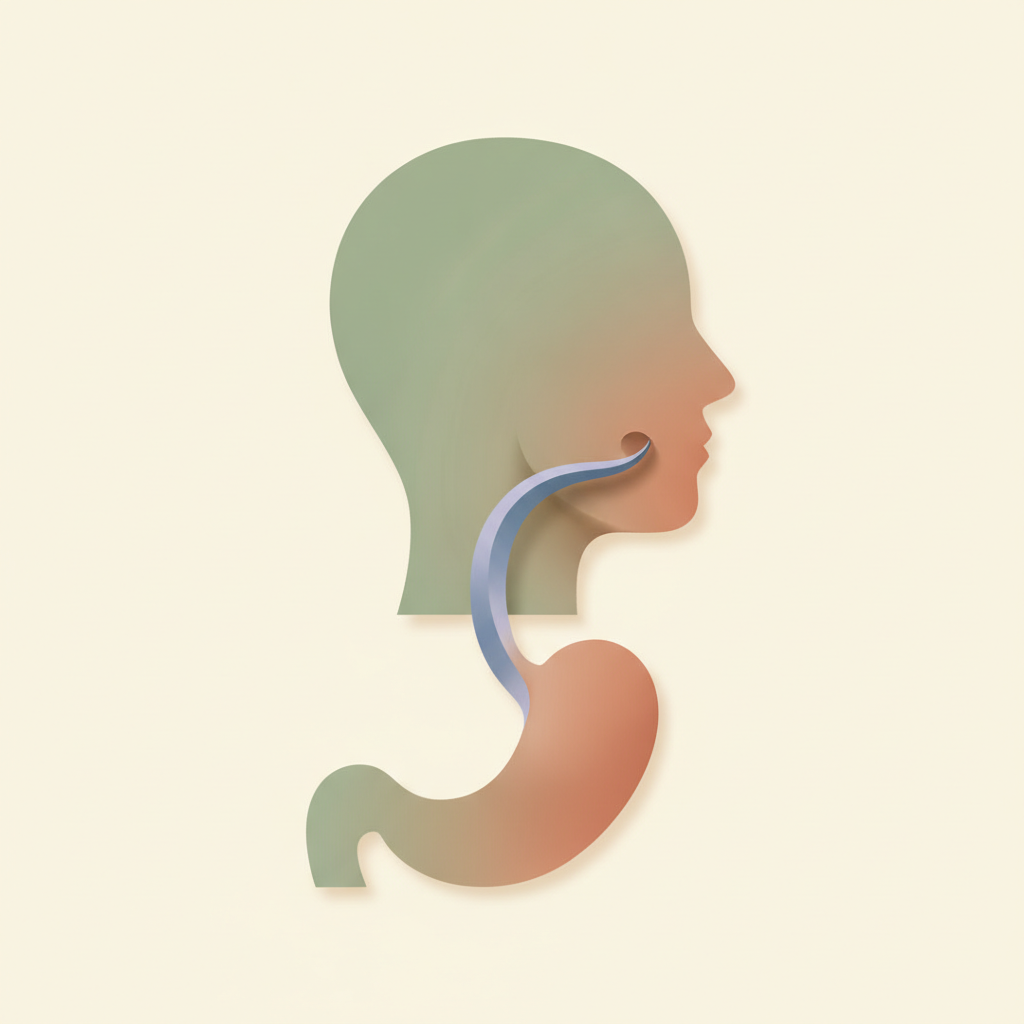
Most people picture heartburn when they think of reflux: a burning feeling behind the breastbone, usually after a meal or lying down. Silent reflux — the clinical name is laryngopharyngeal reflux, or LPR — can happen with none of that. No burning, no obvious link to food, sometimes no chest symptoms at all. Just a throat that never quite feels right.
Same substance, different destination
GERD and LPR both involve stomach contents moving where they shouldn't. In typical GERD, that's up into the esophagus, which is lined with tissue built to tolerate at least some acid exposure. In LPR, small amounts of acid and digestive enzymes travel further — up past the esophagus into the throat and voice box (the larynx and pharynx). That tissue isn't built for acid exposure at all, so it reacts to even brief, small amounts.
This explains why LPR often shows up without heartburn. It doesn't take a large reflux event to irritate the throat — a small amount, a few times a week, is enough to cause ongoing symptoms, and that small amount frequently isn't enough to register as classic heartburn.
What LPR tends to feel like
- A sensation of a lump in the throat (globus)
- Chronic throat clearing
- Hoarseness, especially in the morning
- A cough that doesn't respond to typical cough treatment
- A sour or bitter taste with no clear trigger
- A feeling of post-nasal drip that isn't from allergies or a cold
Because none of these scream "reflux," LPR is frequently misdiagnosed first as allergies, a cold that won't resolve, or vocal strain — sometimes for months, before reflux is considered.
Why it's easy to miss
Standard reflux advice is built around heartburn: avoid trigger foods, don't lie down after eating, consider antacids. Someone with LPR and no heartburn often doesn't connect their throat symptoms to any of that, because nothing about their experience feels food-related in the moment.
Diagnosis usually starts with a review of symptoms and a trial of reflux treatment to see if things improve; in persistent or unclear cases, an ENT may examine the throat and voice box directly, since visible irritation there is one of the more reliable signs.
If a cough, hoarseness, or throat-clearing habit has lasted more than a few weeks with no clear cause, it's worth mentioning reflux to a doctor — even without a single episode of heartburn.